
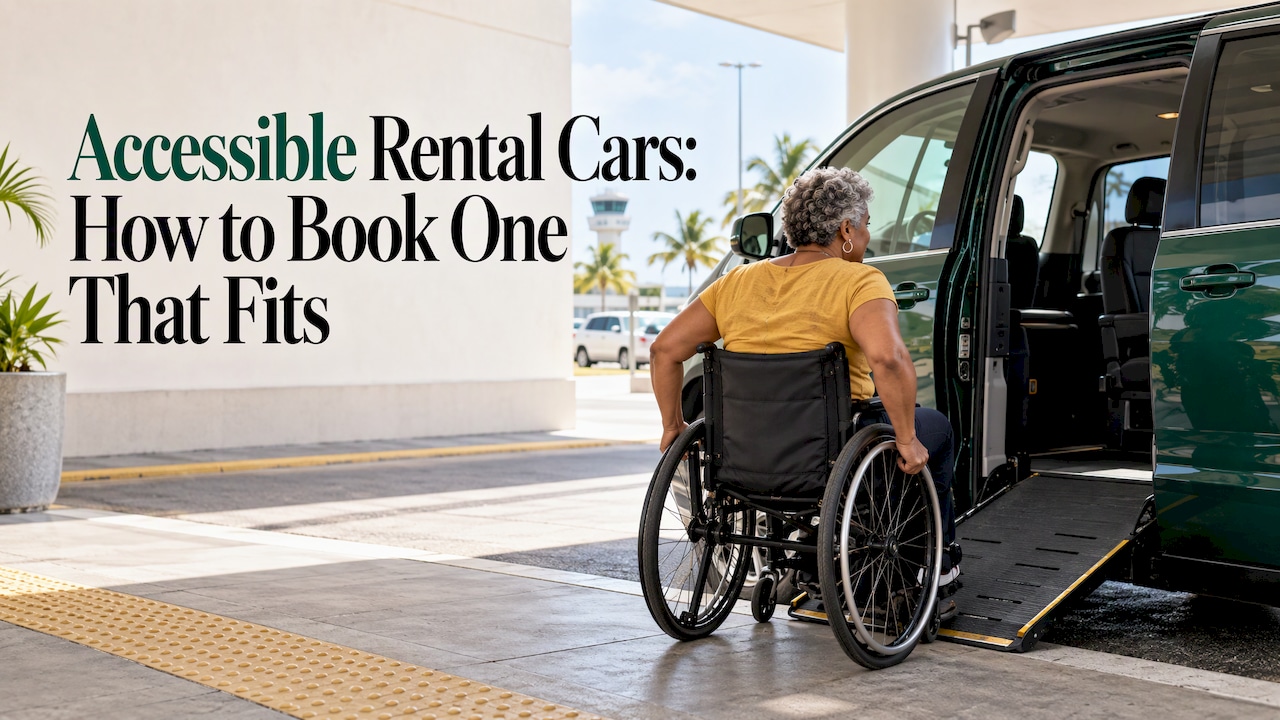
An accessible rental car is a regular rental with the right equipment added: hand controls for drivers, or a ramp or lift van for passengers who use a wheelchair. In the US, you can get both. The catch is timing and the type of provider. Adaptive driving devices come from mainstream rental counters with advance notice. Ramp vans usually come from specialized mobility companies. Book early, confirm the exact equipment in writing, and check the fit before you leave the lot.
This guide covers what to ask for, how far ahead to book, your rights under the ADA, and how to handle GPS and Wi-Fi in the car. It also covers how to apply the same checklist when you rent from a local host, including on a Caribbean trip.
TL;DR
- Two main types exist: cars with adaptive driving devices (hand controls, spinner knobs, pedal extenders) and vans with ramps or lifts for wheelchair passengers.
- Request adaptive equipment at least three business days ahead. Companies must provide it when possible, but they don’t have to keep it in stock.
- A renter who can’t drive because of a disability can rent with a qualified companion driver, and the additional driver fee must be waived.
- For GPS, a phone and a phone mount usually beat a rented unit. Confirm built-in navigation before you book if you need it.
- Whoever you rent from, get the equipment confirmed in writing and test it at pickup.
Table of Contents
- Two kinds of accessible rental, and who you ask
- How far ahead to book
- What to check before you reserve
- Your rights, in plain terms
- Age, license, insurance and payment
- GPS in a rental car
- Renting from a local host
- Pickup-day checklist
- Perspective
- Find a vehicle that fits your trip
- FAQ
- Sources
Two kinds of accessible rental, and who you ask
The phrase “accessible rental car” covers very different needs, so start by naming yours.
Adaptive driving equipment is for people who drive with a disability. According to reporting by The New York Times, major US rental companies typically provide hand controls, spinner knobs, left-foot accelerators and pedal extenders at no extra cost, though they usually need advance reservation.
Modified vans are for passengers who use a wheelchair, and sometimes for drivers too. Afar’s guide to renting a wheelchair-accessible van explains that these vehicles may have hand controls for a disabled driver or ramps for wheelchair passengers. It also notes they are offered by specialized mobility companies rather than the usual airport counters.
That last point matters. An industry expert quoted in the same Afar piece says travelers often hit a dead end when searching general airport sites for modified vans, and recommends going to specialized mobility van providers. So the practical split is:
| Your need | Where to start | What to confirm |
|---|---|---|
| Hand controls, spinner knob, pedal extenders | A mainstream rental company, reserved ahead | Device type, installation at your pickup location, no added fee |
| Wheelchair-accessible van with ramp | A specialized mobility van rental company | Rear or side entry, ramp dimensions, tie-downs, seating count |
| Transfer-friendly regular car | Any rental source, including a local host | Seat height, door opening width, trunk space for a chair or scooter |
| A driver who isn’t you | A chauffeur or companion driver arrangement | Who is licensed and listed, any fees waived |
How far ahead to book
The New York Times advises requesting adaptive devices at least three business days in advance. The reason is practical: the Paralyzed Veterans of America’s rental car FAQ clarifies that rental companies must provide cars with adaptive equipment when possible, but aren’t required to keep that inventory on hand at every location. Availability depends on the location and your lead time.
In practice, that means:
- Book the car and the equipment together. Don’t reserve a standard car online and hope to add hand controls at the counter.
- Call the specific pickup branch a few days before arrival and ask them to confirm the device is installed or scheduled.
- Ask for a written confirmation, an email is enough, and bring it with you.
- Leave buffer for holidays and peak travel. Specialized vans are limited in number, so popular weeks fill up.
The industry body ACRISS also publishes guidance on accessibility in car rental. It emphasizes special equipment codes at booking, so that the right accessibility support is flagged for the provider, and it advises confirming availability and suitability with the rental company before you reserve.
What to check before you reserve
A good reservation answers these questions before you pay anything.
For drivers using adaptive devices
- Which device is fitted: hand controls (push-pull, push-rock, or another style), a spinner knob, a left-foot accelerator, pedal extenders?
- Is it installed already, or will someone install it before you arrive? By when?
- Will you get a few minutes to adjust and test it in the lot?
- Is there any charge? Mainstream companies typically provide these devices free, so a fee is worth questioning.
If you use your own portable device, ask whether the company allows it and how it must be fitted and removed.
For wheelchair passengers
The entry style of a van changes everything. Afar explains that a rear-entry van deploys its ramp from the back, and a side-entry van deploys it from the passenger side. A traveler quoted in the article notes that ramp position strongly affects usability and safety in dense urban areas. Think about where you’ll park:
- Side-entry needs clear space beside the vehicle. That can be hard on narrow streets or in tight garages.
- Rear-entry needs space behind the vehicle. It can work well in parallel parking but not if cars tend to park close behind you.
Also ask for the interior details that decide whether your chair actually fits: door opening height, ramp width and weight limit, the number of tie-down points, whether the chair faces forward, and how many companions can sit. Give the provider your chair’s measurements and weight, not just “standard manual” or “power chair.”
For everyone
- Pickup location and hours, and whether the location handles adaptive equipment.
- How the vehicle is returned, particularly if a device needs to be removed.
- The emergency number, and what happens if the equipment fails mid-trip.
Your rights, in plain terms
Under Title III of the Americans with Disabilities Act, rental car companies are public accommodations and may not discriminate against people with disabilities. The PVA FAQ adds that this includes accessible airport shuttle service or an equivalent accessible option.
Two points are worth knowing before you call:
- You can rent without driving. The PVA states that a renter who can’t drive because of a disability may rent with an accompanying licensed driver who meets the company’s minimum qualifications, and the company must waive additional driver fees.
- “When possible” has limits. The same source says companies aren’t required to keep adaptive vehicles in stock. That’s why lead time matters more than any argument at the counter.
If a company refuses a request that seems reasonable, ask for the reason in writing and contact the PVA or the Department of Justice’s ADA information resources. For a medical or legal question about your particular situation, speak to your occupational therapist or a disability rights attorney.
Age, license, insurance and payment
Requirements differ by provider, so confirm each before you book. As a pattern, expect to need a valid driver’s license (for the person driving), proof you meet the minimum age, and a payment card in the driver’s name. Some specialized van companies also ask for proof of insurance. For example, one California provider of accessible vans lists a minimum age of 23, a valid US license, proof of insurance and a valid credit card among its requirements. Another provider may differ, so ask.
Insurance deserves a second look when a vehicle has modifications. Ask whether the modification, the ramp or lift and any installed controls, is covered by the rental agreement or by your own policy, and what you would owe if it were damaged. Get the answer in writing.

GPS in a rental car
Many travelers searching for an accessible car also want reliable navigation, especially when they can’t afford detours or hunting for step-free routes. The cheapest and most flexible solution is usually your phone.
AAA’s travel service recommends a phone mount instead of renting a GPS unit for US driving, and says to pull over safely before adjusting your phone or map. The same guide advises checking whether your quote includes fees, because airport rentals can carry steep surcharges. A rented GPS is an extra line item, so ask about the daily price before you add it.
Here’s a simple way to decide:
- Bring your phone and a mount. Download offline maps before you travel in case your signal drops. Pack a charging cable and a car charger.
- Ask about built-in navigation when you book if you want it. Availability varies by vehicle and by location, so request it as a feature and don’t assume it.
- Use a rented unit only if you can’t use a phone, for example if you have no data plan in the area. Confirm the price and the language settings first.
- Plan for Wi-Fi the same way. Some vehicles offer an in-car hotspot, but a portable hotspot or your phone’s tethering is the safer assumption. Ask the provider what the car includes before you rely on it.
If you’re driving with hand controls, set up your route and mount before you leave the lot. Adjusting a screen while moving is a risk, so pull over safely to make changes.
Renting from a local host
Not every accessible need requires a full ramp van. Many travelers manage with an ordinary vehicle that has the right seat height, a wide door opening and room for a folded chair or scooter. Renting from a local owner can help in that case, because you can ask the person who actually owns the car about those details.
On Yamo, local hosts list their own vehicles and you can browse them on our Find a Rental page. We built the platform around Caribbean destinations, so the tips below apply when you’re heading to the islands:
- Message the host before booking and ask about door height, seat height, trunk size and whether your mobility aid fits. Ask for photos with something for scale.
- Agree on pickup in advance, including where the car will be parked and whether the surface is level.
- Confirm any equipment in writing. If the host doesn’t have a specific adaptation, they should tell you plainly so you can look elsewhere.
- Review our Caribbean car rental checklist for documents, costs and pickup steps, and check how our insurance works before you book.
The How it works page walks through booking from search to return. If a chauffeur makes more sense than driving yourself, see our chauffeur experience.
Pickup-day checklist
Before you drive away, spend ten minutes on these:
- Match the confirmation to the vehicle. The equipment you were promised should be there and installed.
- Operate it. Try the hand controls, spinner knob or pedal extenders. Deploy the ramp, secure a chair or the dummy weight, and check the tie-downs.
- Adjust seat, mirrors and steering as you would for a long drive.
- Photograph the vehicle inside and out, including the adaptive equipment.
- Save contacts: the provider’s support line and roadside assistance.
- Set up navigation with your phone in its mount, and plug in the charger.
If anything doesn’t work, say so before you leave. It’s much easier to swap a vehicle or fix a device in the lot than at the roadside.
Perspective
We hear the same story from travelers: the hard part of renting an accessible car isn’t the driving, it’s the uncertainty. You don’t know if the vehicle will fit until you see it, and by then it’s too late to change plans.
That’s why we think a marketplace where you can talk to the owner before booking is useful. On Yamo, local hosts manage their own listings, availability and rental rules, so you can ask direct questions about the specific car you’d be driving or riding in. Our platform is designed to be transparent, so renters know what they’re booking and hosts keep control of how they rent.
Our advice is the same whatever you rent: ask specific questions, get the answers in writing, and test the equipment at pickup. And if you’re a vehicle owner with a car that suits travelers who need space or easy transfers, we’d like to hear from you, because clear and honest listings are what make this work.
the author
Find a vehicle that fits your trip
If you’re heading to the Caribbean, you can browse vehicles from local hosts on Yamo, compare what’s on offer for your dates and message hosts with your questions before you book. Start on our Find a Rental page.

Own a vehicle that could suit travelers with specific space or access needs? You can become a host and describe it accurately in your listing.
FAQ
Can I rent a wheelchair-accessible van from a regular rental company?
Usually not from the standard fleet. Wheelchair vans with ramps are generally offered by specialized mobility companies, and travelers who search general airport sites often come up empty. Search for specialized accessible van rental in your destination and book well ahead.
Do hand controls cost extra?
Major US rental companies typically provide adaptive driving devices such as hand controls and spinner knobs at no extra cost, according to The New York Times. They usually require advance reservation, so request them at least three business days before pickup.
Can someone else drive if I have a disability?
Yes. A renter who can’t drive because of a disability may rent with an accompanying licensed driver who meets the company’s minimum qualifications. The company must waive the additional driver fee, according to the Paralyzed Veterans of America.
Do I need to rent a GPS?
In most cases no. AAA recommends using a phone mount instead of renting a GPS for US driving. If you want built-in navigation, ask for it when you book, and check any daily fee first.
Can I get Wi-Fi in a rental car?
Some vehicles come with connectivity, but it varies by car and provider, so ask before you rely on it. Your phone’s hotspot and downloaded offline maps are the dependable backup.
Sources
- How to Rent a Wheelchair-Accessible Van for Your Next Trip, Afar
- Tips on How to Plan an Accessible Road Trip, The New York Times
- Car Rental FAQs, Paralyzed Veterans of America
- Accessibility in car rental, ACRISS
- 7 Things to Know Before You Rent a Car, AAA Via
Leave a Reply